

This article was originally published in April 2024 and has now been updated with new research and usage guidance as of November 2025.
Red and near-infrared light, often called photobiomodulation (PBM), is being studied as a way to support the body’s normal wound-healing processes when wavelength and dose are used thoughtfully.
Here, we will walk through how red light therapy for wound healing appears to work, what the current evidence suggests, and how to think about safe, realistic at-home use alongside standard care. You will also see how to pick a device and routine you can actually stick with, rather than chasing perfect specs on paper.
PBM is not a magic shortcut. It is a tool. Used with the right expectations, it may help support tissue repair and comfort while you and your clinician stay focused on overall wound care.
Quick summary
Before we get into mechanisms and dosing parameters, it helps to see the big picture. This quick overview is meant to orient you so that the later sections feel like filling in the details, not learning a new language from scratch.
You will learn:
- What PBM is: a noninvasive light therapy using visible red light (roughly 630–670 nm) and near-infrared light (around 800–880 or 940 nm) that interacts with cellular energy systems rather than heating tissue.
- Which wound types can PBM complement, from minor acute wounds to certain chronic wounds, and where do more complex situations need active medical oversight.
- How practical variables like treatment distance, session time, frequency, irradiance, and energy density (J/cm²) shape dose.
- How to choose at-home devices like LED panels you will actually use consistently, and what to know about BIO panels, BIOMAX, and BIOMAX PRO.
Keep this structure in mind as you read. If you ever feel lost in terminology, you can always come back to this section and re-anchor to the core questions: what is the light doing, for which wounds, at what dose, and under whose guidance.
What is red light therapy (PBM)?
To understand how red light therapy might help wounds, you first need a clear definition. PBM refers to the use of specific wavelengths of red and near-infrared light, delivered at low power, to influence cellular function without causing thermal damage. Historically, this has also been called low-level laser therapy, although today both clinical lasers and high-output LED panels can be used for similar biological goals.
In practice, PBM typically uses red light around 630–670 nm and near-infrared light around 800–880 nm or 940 nm. These wavelengths are chosen because they interact with mitochondrial chromophores, particularly cytochrome c oxidase, a key enzyme in the respiratory chain. When photons are absorbed, they may help cells produce more adenosine triphosphate (ATP), which in turn can support the energy-intensive work of tissue repair.
Red light tends to act more on superficial tissues, while near-infrared light penetrates deeper layers. That is why both wavelengths are frequently combined in LED panels and clinical lasers used in research on wound healing.
At-home devices built around high-output LED panels are now common. At the same time, clinical lasers are still widely used in hospitals or rehabilitation settings for more controlled low-level laser therapy sessions.
If you prefer a more narrative explanation of what is going on at the cellular level, you can think of PBM as helping “power-hungry” cells do their job more efficiently, which is why it shows up in discussions of skin health, joint comfort, and what red light therapy does beyond wound care.
How PBM may support wound healing
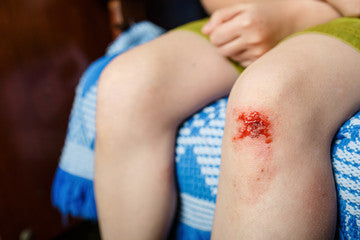
Once you understand PBM as a light-based nudge to cell metabolism, it becomes easier to see how it might influence wound healing. Wound repair moves through overlapping phases, from hemostasis and inflammation to proliferation and extracellular matrix remodeling. PBM appears to interact with several of these stages at once.
One proposed mechanism is increased cellular energy. When red and near-infrared light are absorbed by cytochrome c oxidase, mitochondrial respiration can become more efficient.
This may increase ATP availability in cells like keratinocytes and fibroblasts, which are central players in tissue repair. More energy can support processes such as fibroblast proliferation, collagen synthesis, and cell migration into the wound bed.
PBM also seems to participate in inflammation modulation. Early in wound healing, some inflammation is essential, but if it persists too long, it can delay closure. Studies suggest that PBM may support an earlier shift from the inflammatory phase to the proliferative phase, where granulation tissue and new blood vessels form.
Microcirculation is another focus. Certain wavelengths appear to influence nitric oxide signaling, which is linked to vasodilation.
Improved local blood flow can support oxygen and nutrient delivery to the wound and help clear cellular debris. This nitric-oxide-related vasodilation is one reason near-infrared light is often highlighted for deeper tissues.
Downstream, these inputs may affect extracellular matrix remodeling. PBM has been associated with changes in collagen I and III production, as well as more organized extracellular matrix remodeling, which can influence tensile strength and long-term scar appearance.
Altogether, this combination of energy support, inflammation modulation, and microcirculatory changes helps explain why researchers are exploring PBM for both acute wounds and chronic wounds.
Tip: Correct wavelength, dose (J/cm²), distance, and consistency matter more than any one feature.
Evidence snapshot
Mechanistic theories are useful, but most people care about outcomes: does PBM meaningfully change healing or comfort in real wounds? The answer so far is “possibly, in the right context, with the right parameters,” which is why dosing parameters like irradiance and energy density are so important in research.
Acute wounds
For acute wounds, such as minor cuts, superficial burns, and surgical donor sites, low-level light therapy has been associated with faster epithelialization and improved comfort scores in several small trials.
Some postoperative recovery studies suggest that PBM may reduce pain and support faster closure when used adjunctively after surgery, compared with sham treatment. However, study designs, wavelengths, and reported energy density (J/cm²) vary widely, so results are not directly comparable.
Chronic wounds
Chronic wounds like diabetic foot ulcers and venous or pressure injuries are more complex. Meta-analyses and recent randomized trials indicate that red and near-infrared light, delivered via LEDs or clinical lasers, can improve granulation tissue formation and closure rates when added to standard wound care.
In diabetic foot ulcers, for example, some studies report a greater percentage reduction in ulcer area after several weeks of low-level light therapy. Even so, PBM is still considered an adjunct, not a stand-alone treatment, particularly given the vascular and metabolic issues involved.
Scars over time
Scar appearance and tensile strength are also active areas of research. A 2025 study on PBM for scar healing using a 660 nm diode laser reported improvements in visual scar scores and functional skin quality after multiple sessions, suggesting a possible role in guiding extracellular matrix remodeling.
These findings align with earlier work showing that PBM can influence collagen synthesis and scar architecture, although again, protocols differ and outcomes vary.
The bottom line: evidence for PBM in wound care is promising but heterogeneous. Differences in wavelengths, irradiance, energy density, session time, and treatment frequency mean there is no single “best” protocol. That is why, especially for more serious wounds, PBM should be integrated thoughtfully into a broader treatment plan rather than seen as a replacement for standard care.

Where PBM may be useful, and when to get help
The next question is how to decide where red light therapy fits into a real-world wound care plan. Think of PBM as a supportive tool for certain scenarios and a “do not go it alone” factor in others.
PBM is most often used as an adjunct for minor acute wounds: small cuts, scrapes, superficial burns, or uncomplicated post-op incisions, ideally after a clinician has confirmed that the wound is clean and healing as expected. It may also be considered around pressure-prone areas in immobile people, as part of broader strategies to prevent pressure injuries.
For deep, infected, ischemic, or non-healing wounds, self-directed red light therapy is not appropriate. People with diabetes, vascular disease, or significant immune compromise should involve a clinician early and explicitly discuss safety and contraindications for any new modality, including PBM.
That conversation should include realistic expectations about what red light therapy for wound healing can and cannot do in the context of diabetic foot ulcers or long-standing pressure injuries.
As a simple rule of thumb, seek urgent medical help if:
- The wound is large, deep, or caused by an animal or human bite
- You see spreading redness, warmth, increased pain, or drainage that suggests infection
- A chronic wound changes suddenly in size, color, or odor
PBM should never delay appropriate medical care. Think of it as one potential layer added on top of, not instead of, established wound management.

Practical parameters (starter ranges; non-prescriptive)
If you and your clinician agree that PBM could be reasonable to explore, the next step is translating research concepts like energy density into a simple home routine.
These starter ranges are intentionally conservative and non-prescriptive, since optimal parameters will vary by person, wound type, and device:
- Wavelengths: For wound-related applications, many devices use red light around 630, 650, or 660 nm and near-infrared light around 810, 830, or 850 nm. Panels that combine 660 nm with 850 nm can cover both more superficial and deeper tissues. If you want a deeper dive into how different wavelengths behave, see the explainer on red light wavelength.
- Treatment distance and session time: Most at-home LED panels are designed for use at a treatment distance of roughly 8–14 inches for focused problem areas and 16–24 inches for more general skin or wellness routines. A common starting point is about 10 minutes per area, adjusting gradually based on comfort and guidance rather than jumping to long sessions. Manufacturers’ dosing parameters often express this in terms of irradiance and energy density, for example, delivering a given number of J/cm² at a specific distance and session time.
- Frequency: For many users, a baseline of 3–5 days per week is realistic. In the early stages of acute wounds, brief twice-daily sessions can be considered under guidance, then tapered as healing progresses. Long-term, consistency matters more than squeezing in occasional marathon sessions.
- Signs of overuse: Short-term redness or a feeling of tightness can be a normal response, but may also signal a dose that is too high. Unusual fatigue or irritation around the treatment area can be a cue to back off on session time, increase treatment distance, or reduce total weekly frequency.
- Eye protection: With high-output panels, it's important. Avoid staring directly into the LEDs, and use appropriate eye protection, especially when treating areas near the face. This is true even if you are not shining light directly into the eyes.
Whenever you read a spec sheet, look for clarity on wavelengths, irradiance at a stated distance, and suggested dose ranges in J/cm². This makes it easier to translate research-backed energy density into a practical, repeatable routine at home.
Treating minor wounds at home (step by step)
Once you understand the building blocks of wavelength, treatment distance, and frequency, you can start to map out a simple, repeatable process for minor wounds.
The goal is to integrate PBM into the same routine you are already using for cleaning and protecting the area, not replace it:
- Clean and dress the wound per clinician guidance: For acute wounds or small post-op incisions, follow the instructions you have been given for cleaning, using topical products, and maintaining moisture balance. PBM should be layered on top of, not instead of, that plan.
- Position your panel or other at-home devices: Set your LED panels at the agreed treatment distance, usually 8–14 inches for localized wounds. Make sure the wound is comfortably exposed, without pressure or friction, and check that you do not feel heat or stinging on the skin during the session.
- Run your session and keep simple notes: Use built-in timers or an external timer to keep session time predictable. Many people find that logging treatment distance, minutes, and a brief note on how the wound looks or feels helps them notice trends over time. This can be useful when reviewing progress with your clinician.
- Re-dress and off-load as needed: After the session, reapply dressings according to instructions. For pressure-prone areas, consider off-loading strategies, such as using cushions or implementing repositioning schedules. PBM cannot compensate for ongoing pressure on a vulnerable site.
- Support the fundamentals of healing: Wound healing depends heavily on basics like adequate protein intake, vitamin C, sufficient sleep, and, for people with diabetes, thoughtful glucose management. Light alone cannot override systemic issues, so it is worth treating these fundamentals as part of your protocol, not an afterthought.
Choosing a quality panel (so you’ll stick with it)
No matter how strong the science looks, a panel that sits in the box does not help anyone. Choosing the right device is partly about technical specs and partly about usability in your real environment.
From a science perspective, look for panels that disclose proven wavelengths such as 660 nm and 850 nm, along with transparent irradiance data at a stated treatment distance.
Clear dosing parameters make it easier to match rough research ranges for energy density (J/cm²) without guesswork. Larger LED panels with even coverage can reduce hot and cold spots and simplify multi-area sessions, especially if they offer zero-gap layouts for more complete coverage.
Controls matter more than most people expect. Built-in timers, per-wavelength control, and useful presets can make it easier to standardize session time and frequency so you are not constantly re-entering settings.
For higher-end systems, features such as variable pulse rates can be helpful for advanced users, though the clinical advantages of specific frequencies are still being explored.
Safety and support are non-negotiable. Look for an FDA-registered Class II medical device classification, appropriate electrical safety certifications, and human support if something goes wrong. Many users also appreciate the included eye protection and straightforward guidance on safety and contraindications.
Within the PlatinumLED lineup, BIO panels offer a simple, economical entry into at-home red light therapy. BIOMAX panels expand the spectrum and add digital controls and modular setups, allowing you to build multi-panel arrays over time.
While BIO and BIOMAX panels are excellent for broad wellness and skin-focused routines, BIOMAX PRO exists for the biohacker, clinician, or researcher who wants fine-grained control over dose and parameters, not just an on/off setting.
At the top of the range, BIOMAX PRO Ultra delivers the highest verified output in the lineup, along with seven independently controlled wavelengths, zero-gap layout, variable pulse options from 0 to 990 Hz, and programmable Smart Modes.
Independent testing, including the LightLab International test report for BIOMAX PRO Ultra, verifies the panel’s irradiance and radiant energy delivery, which enables advanced users and clinics to build protocols that more closely resemble clinical-grade PBM than a generic wellness routine.
If you would like a deeper dive into general red light therapy benefits beyond wound care, that overview can help you think through whole-body use cases as well.

FAQs
Even with a clear routine, the same questions tend to come up when people start exploring PBM for tissue repair and scar management. These answers are meant as general guidance and should be personalized with your clinician.
Do I need both red and near-infrared light?
Not always, but many people and clinicians prefer to use both. Red light around 660 nm tends to interact more with the superficial skin layers, while near-infrared light, such as 850 nm, penetrates deeper into the skin.
Combining them may help support both surface healing and deeper tissues involved in tissue repair, especially in areas with thicker skin or underlying soft tissue.
Can PBM work through bandages or dressings?
It depends on thickness and material. Thin, semi-transparent dressings may allow some light through, particularly near-infrared light, which is less visible but penetrates deeper. Opaque or heavily layered dressings will block most wavelengths of light. If you are considering shining light over a dressing, ask your clinician first; they may recommend brief exposure after a dressing change instead.
How soon might I notice changes?
This is highly individual. For minor acute wounds, some people notice changes in comfort or appearance within days to weeks.
For chronic wounds and scar appearance, studies frequently span several weeks to a few months of consistent use before meaningful changes are observed. Adherence to session time, frequency, and overall wound care is often a bigger driver of results than adding extra minutes in a single day.
Can I overdo it?
Yes. More is not always better.
Very high cumulative doses can flatten or even reverse some of the beneficial photobiomodulation responses described in the literature. If you experience persistent redness, discomfort, or unusual fatigue after sessions, consider reducing treatment distance, shortening session time, or taking additional rest days, and let your clinician know.
Will this help scars look better?
PBM is being studied for its potential to influence extracellular matrix remodeling, collagen synthesis, and long-term scar quality. Some research shows improvements in scar appearance and texture after repeated PBM sessions, especially when started relatively early in the remodeling phase.
Results are variable, and factors like wound type, location, and overall health play a large role, so it is best to think of PBM as a possible supportive tool rather than a guaranteed cosmetic solution.
See BIOMAX PRO panels and compare models
PBM tends to work best when it fits naturally into your life. That means matching panel coverage to your space, starting with short, repeatable sessions and tracking progress week by week rather than chasing overnight transformation.
If you are ready to design a consistent routine around red light therapy for wound healing or broader recovery goals, you can shop BIOMAX PRO to find the BIO panels, BIOMAX, or BIOMAX PRO configuration that fits your needs.
In clinics or multi-site environments, it can be helpful to speak with the team about zero-gap arrays, standardized dosing parameters, and simple SOPs to ensure everyone uses the system safely and consistently.
Used this way, PBM is less about chasing trends and more about building a thoughtful, repeatable system to support how your body already knows how to heal.
Medical disclaimer
Light therapy research is evolving, but that does not replace the role of a trained clinician who can see and examine you in person.
This content is for educational purposes only and is not a substitute for professional medical advice. These devices are not intended to diagnose, treat, cure, or prevent any disease. Consult a qualified healthcare professional about your specific situation.


